
Description:
This activity invites you to imagine a parallel world in which people live more sustainably, with a focus on a particular system/sector such as clothing, housing or food, and to capture this vision in a 100-word outline.
The activity described here is designed to speculate on a large-scale system, but it can be adapted to focus on a particular locality or organisation.
The activity works well individually, but can also be carried out in a small group.
Activity:
Before you start, note the rules of Parallel Presents. All activities should explore:
- a contemporary reality in a parallel world, not the future in our world
- a positive and enticing system, in terms of individual satisfaction, social justice and sustainability
- a system that is physically possible but pushes beyond what feels plausible in our world.
Step 1
Select a particular system/sector such as clothing, housing or food and identify one specific issue relating to that system that frustrates you.
Generate ideas for how this issue could be reversed and select one to create a positive and engaging vision.
Step 2
Develop your core idea – the distinctive essence of your parallel world – by thinking in detail about the ‘what if’ question driving your fiction.
Be playful as you imagine your world. Amplify the aspects that make it distinctive and include quirky elements to make it memorable.
Step 3
Generate a ‘backstory’ for the world: an explanation for why its system developed differently to the system in our own world.
Identify an event in history – genuine or invented – that caused the fictional world to split from our world. This could be months, years or centuries ago.
Step 4
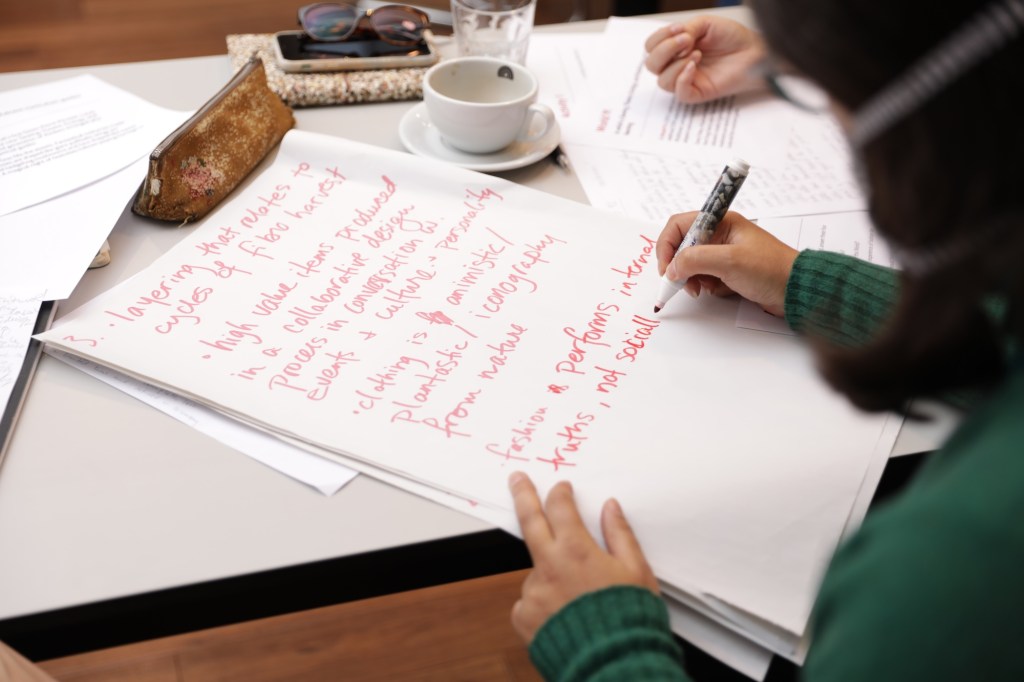
Flesh out the idea and capture it in a 100-word fiction.
Use the first 50 words to describe the core idea and the backstory. Use the second 50 words to describe the everyday practices in your world and key aspects of its culture.
Want more guidance?
Further guidance for this process is provided on the Fashion Fictions site. It is designed to address the fashion system, but can easily be adapted for other areas of interest.
 Parallel Presents